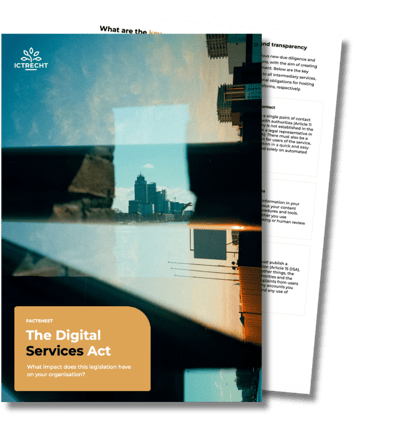
Since 17 February 2024, the Digital Services Act (DSA) is fully applicable. This European law brings significant changes to the digital domain. It establishes clear rules for online platforms and other intermediary services. What does this mean in practice for your organisation?
Our factsheet provides a complete overview of all the important information about the DSA and its implications for your organisation. It helps you understand the exact steps needed to become compliant.
The Digital Services Act (DSA) is a European regulation that applies directly in all Member States. It updates the legal framework from the e-Commerce Directive of 2000, setting out new rules on liability and responsibilities for online platforms and intermediary services. Its goals: a safer, more trustworthy digital environment, support for innovation, and a stronger protection of fundamental rights.
The DSA applies to intermediation services. A legal term for services that transfer information from A to B. The DSA distinguishes three different forms of an intermediary service:
The most important obligations of the DSA are:
Micro and small organisations are excluded from certain obligations. A small organisation is an organisation with fewer than 50 employees and has an annual turnover of less than 10 million euros. A micro-organisation is an organisation with fewer than 10 employees and has an annual turnover not exceeding the 2 million euros.
The DSA has been fully applicable since 17 February 2024.
Yes. Platforms with fewer than 45 million monthly active users fall within the scope of the DSA. This includes platforms where consumers can purchase from traders, such as Marktplaats.